An updated guide to language, attention, imagery, and nervous-system relief
Quick read.
- Language, attention, imagery, and expectation can change the pain experience for some people.
- The strongest evidence is for relaxation, mindfulness, and hypnosis-related approaches, not every broad NLP claim.
- Believable reframing works better than forced positivity.
- These tools are best used as part of a wider pain-management plan, not as a replacement for medical care.
- If a method increases distress, simplify it and seek professional support.
Clinical note. This document is an educational editorial resource. It does not replace diagnosis, emergency assessment, or individualized medical care.
The most useful update to an NLP-based pain guide is honesty. Some of the original claims in this field are too absolute. Pain does not disappear on command for everyone, and no language method should be sold as a guaranteed cure.
That said, there is a valuable core worth keeping: words shape meaning, attention shapes salience, imagery shapes expectation, and expectation can shape the body’s response.
Used carefully, these tools can help people feel less trapped, less helpless, and less fused with the pain signal.
What NLP contributes when pain is the topic
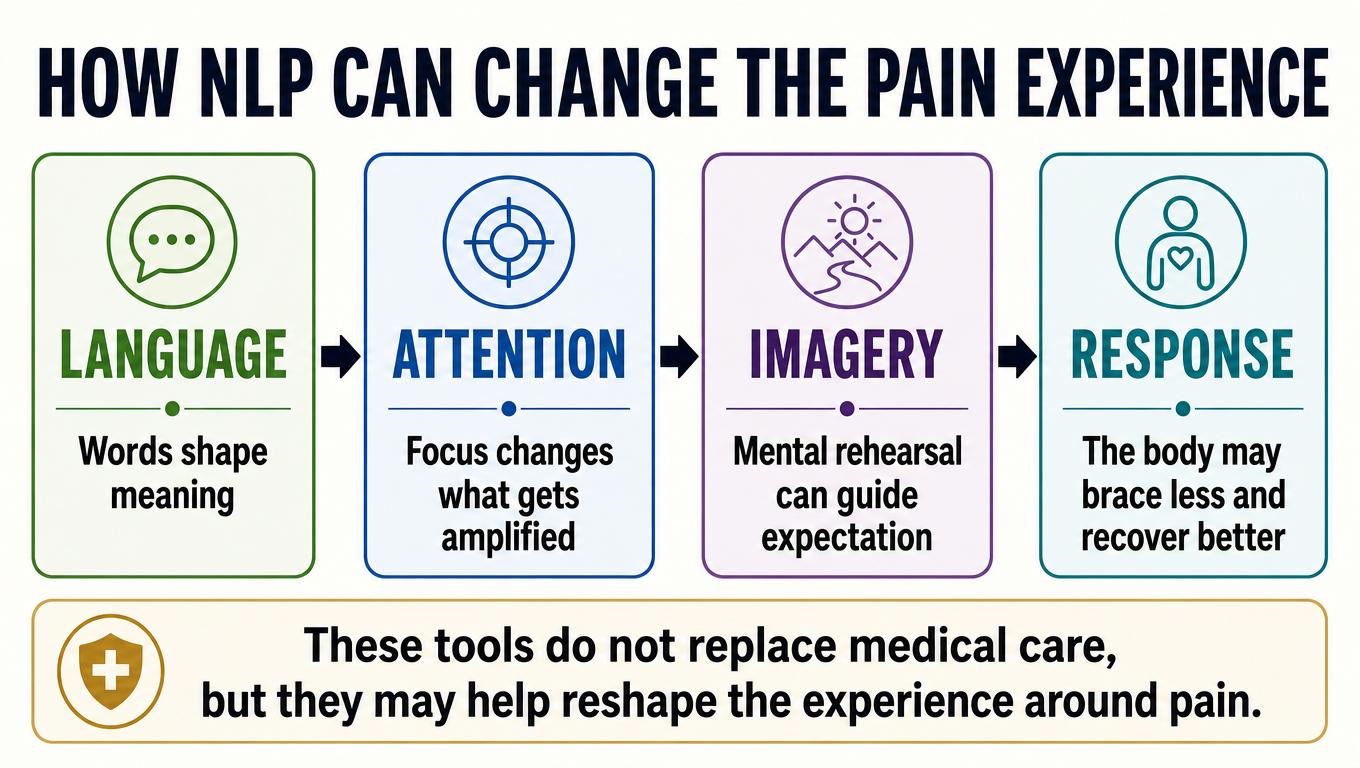
A branded four-part framework showing language, attention, imagery, and response.
At its best, NLP encourages people to notice how they describe an experience, where they focus attention, what internal pictures they create, and what patterns repeat automatically. All of those can matter in pain.
If the inner script says “This will ruin my day,” the body often prepares for threat. If the script becomes more believable and more regulated, the emotional climate can shift too.
Reframing without pretending
The goal of reframing is not to lie to yourself. It is to use language that lowers unnecessary alarm. “I am damaged” often creates a different body response than “My system is activated, and I can help it settle.”
That kind of language change matters because the nervous system responds to meaning, not only to anatomy.
Imagery, hypnosis, and guided attention
The most evidence-aligned part of this conversation is the use of guided imagery, relaxation, and hypnosis-informed practices. These approaches can help some people reduce pain intensity, reduce distress, or improve coping and function.
They are not magic. But they can shift the experience from total helplessness to partial influence, and partial influence is often enough to begin real progress.
A guided NLP-style pain reset
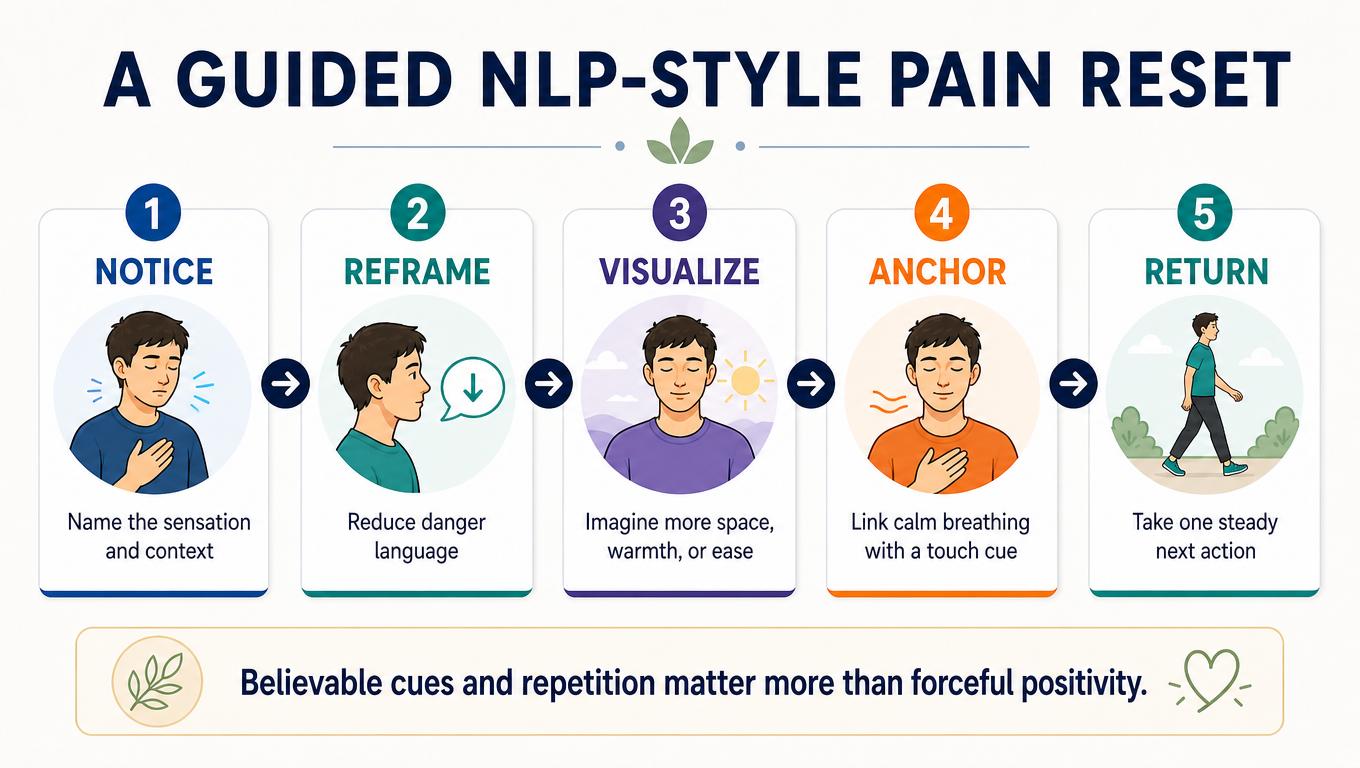
A five-step reset using notice, reframe, visualize, anchor, and return.
Notice the sensation and context. Reframe the meaning with believable language. Visualize more space, warmth, or ease. Anchor that calmer state with breath and a touch cue. Then return to one steady next action.
This is less about control and more about pattern interruption. It gives the body a new sequence to learn.
Where NLP fits and where it does not
NLP-style tools fit best when they are used to reduce fear, improve self-regulation, guide attention, and support a wider recovery plan. They fit poorly when they are marketed as proof that pain is purely mental or instantly reversible.
Use the tools with curiosity, not pressure. If they help, keep them. If they do not, adjust the method instead of blaming yourself.
Upgrade the inner script
| Less helpful pattern | More helpful pattern |
|---|---|
| This sensation is taking over | This sensation is strong, but I can still influence the environment around it. |
| I have to force relief | I can guide the system rather than fight it. |
| If I feel pain, I failed | Pain is feedback, not a verdict on my worth. |
| Nothing changes unless I push harder | Steady repetition often works better than pressure. |
Final thought
The cleanest way to use NLP in pain work is to drop the grandiosity and keep the useful mechanics.
Language, attention, imagery, and expectation do matter. Used responsibly, they can become part of a calmer and more compassionate pain strategy.
References
- International Association for the Study of Pain (IASP) Terminology
- Mayo Clinic Health System – Use mindfulness to cope with chronic pain
- NCCIH – Chronic Pain and Complementary Health Approaches: Usefulness and Safety
- Cleveland Clinic Journal of Medicine – Central sensitization, chronic pain, and other symptoms
- NCCIH – Hypnosis

Rami Bareket
Rami Bareket is an NLP Master Trainer and hypnotherapist with over 30 years of entrepreneurial experience and 20 years as a combat medic. Through NLP, hypnosis, and integrative transformation work, he helps high performers create fast and lasting change from the inside out.
Read Full Bio