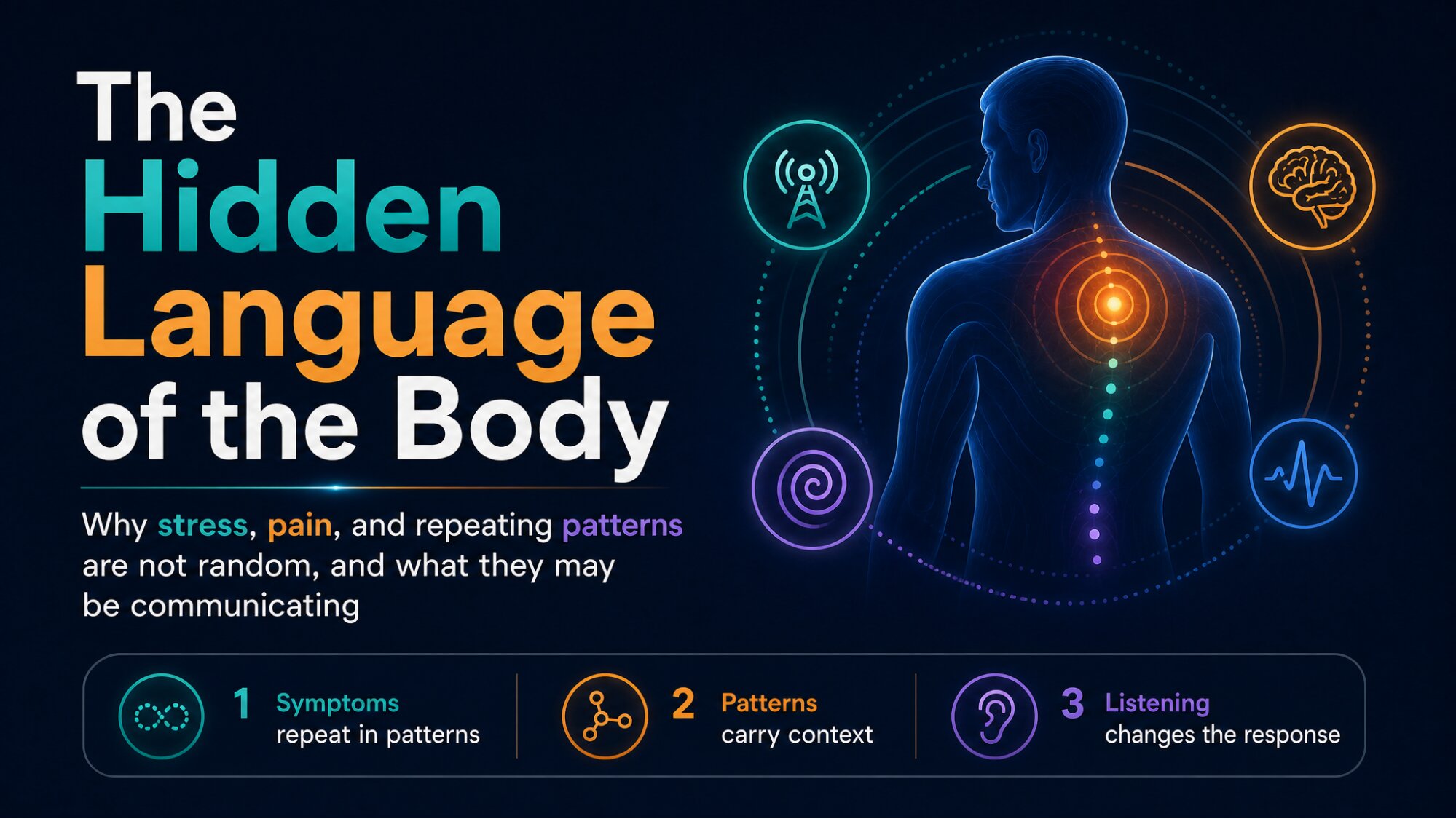
Why stress, pain, and repeating patterns are not random, and what they may be communicating
Most people think the body speaks only through symptoms.
Tension.
Pain.
Fatigue.
Headaches.
Digestive disruption.
Chest tightness.
And when a symptom appears, the instinct is usually to treat the symptom. Remove the pain. Reduce the tension. Manage the fatigue.
That can be appropriate. Symptoms deserve attention and care. But there is another level of understanding available, one that most people have never been shown: the body also speaks in patterns. And those patterns are not random.
The Body Speaks in Patterns, Not Only Symptoms
A symptom is what the body says once. A pattern is what it keeps saying.
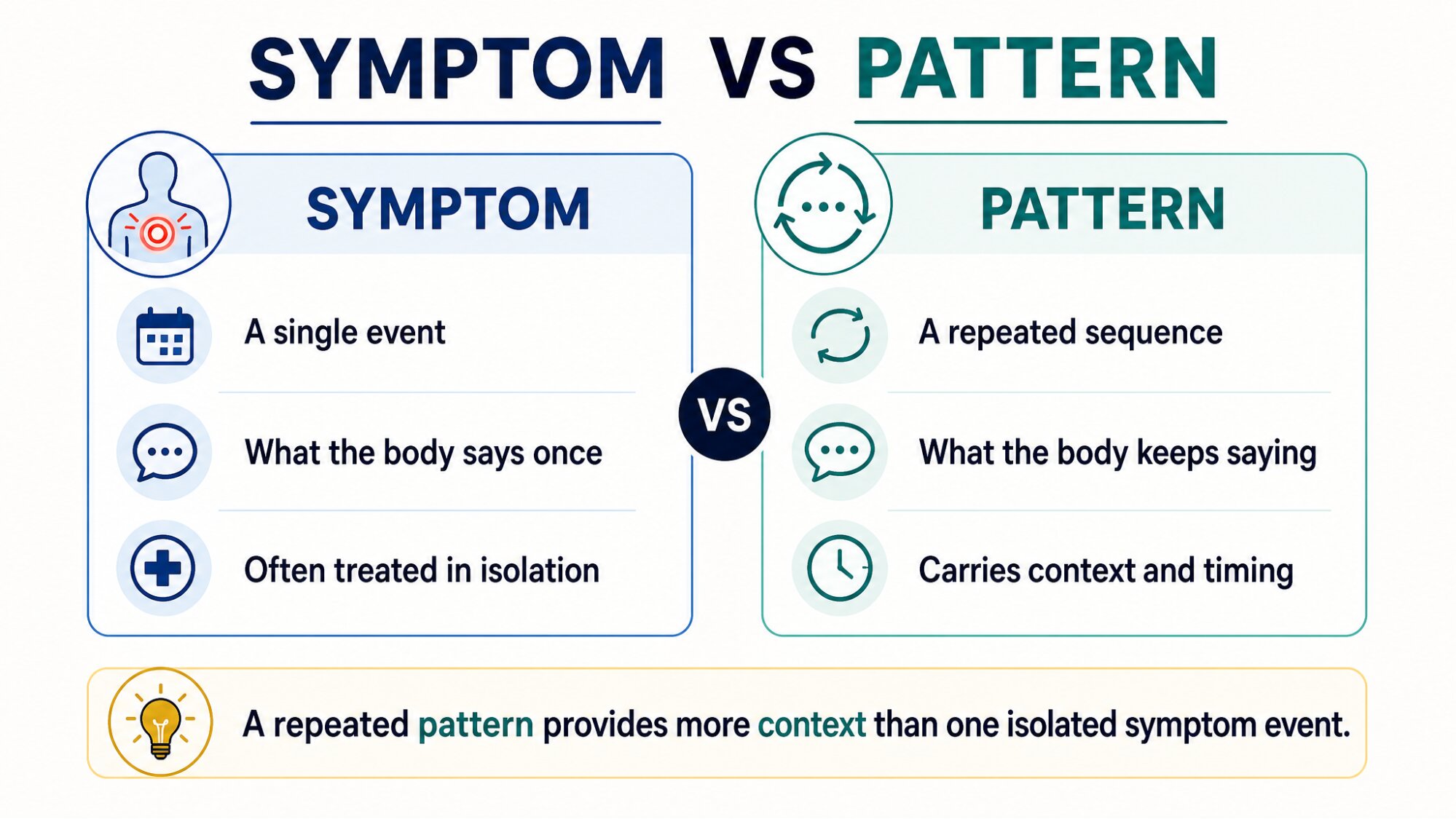
Pain that appears before certain kinds of conversations. Tension that arrives at the same time each week. Exhaustion that follows certain emotional states. Digestive disruption that tracks with anxiety about specific situations. Headaches that appear during periods of suppressed anger or unspoken conflict.
These patterns are not coincidences. They are communications. The body is using the only language it has, physical sensation, to signal what is being held, suppressed, or unresolved at the deeper levels.
Most approaches never ask what the pattern is communicating. They only ask how to make it stop.
Why the Body Stores What the Mind Avoids
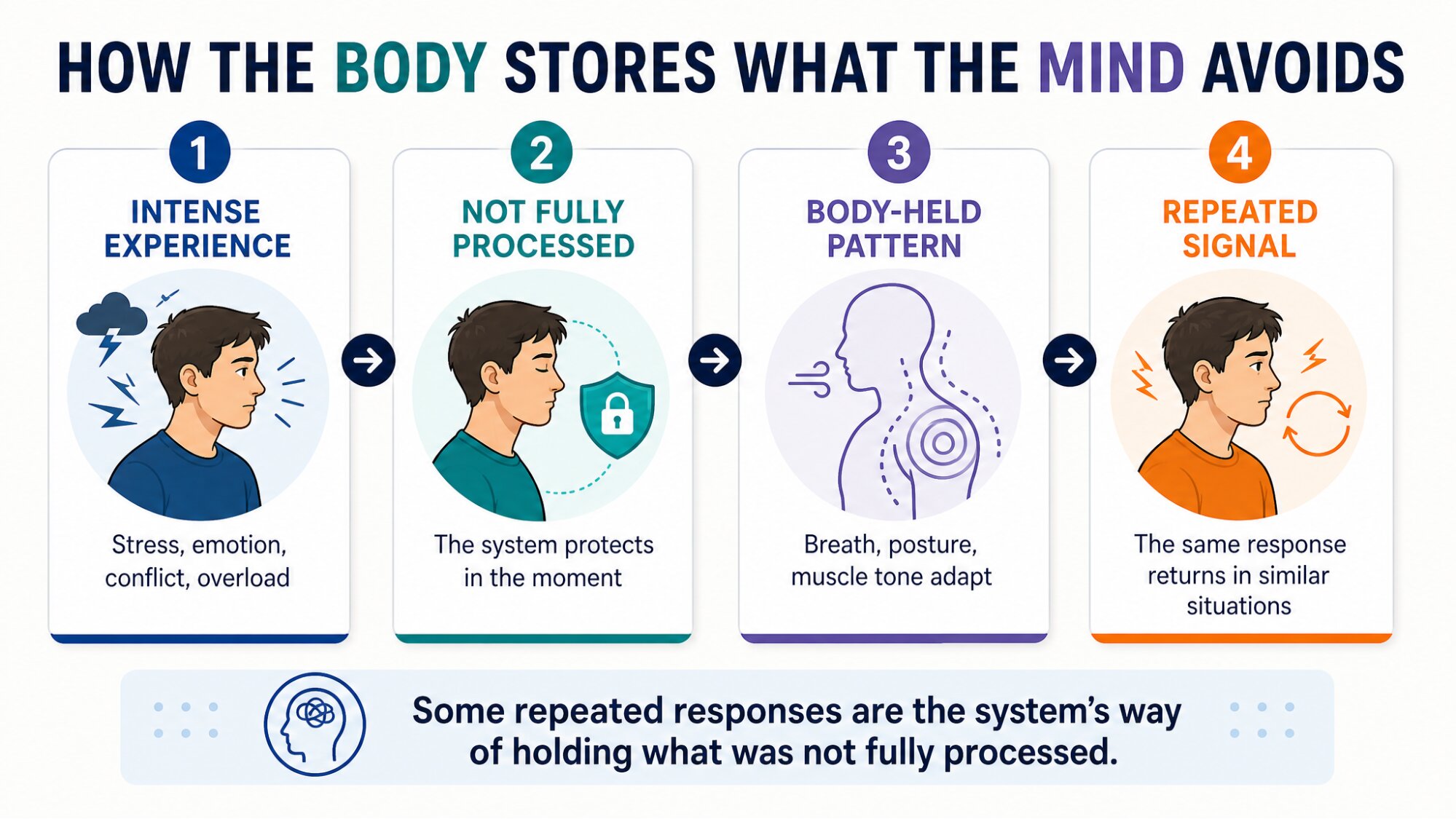
The nervous system and the subconscious mind have a strong drive toward resolution. When something is experienced, whether an emotion, a situation, a conflict, or a traumatic event, the system wants to process it to completion.
But sometimes the experience is too intense, too threatening, or too socially unacceptable to be fully processed in the moment. So it gets stored.
Not in a file. Not as a memory that is always accessible. But in the body. In the tissue tone. In the nervous system's learned responses. In the posture, the breath, the tendency toward certain kinds of tension in certain parts of the body.
The body becomes the repository for what the mind has not yet been able to process. And it keeps the record, faithfully, until the deeper level is addressed.
Common Patterns and What They May Indicate
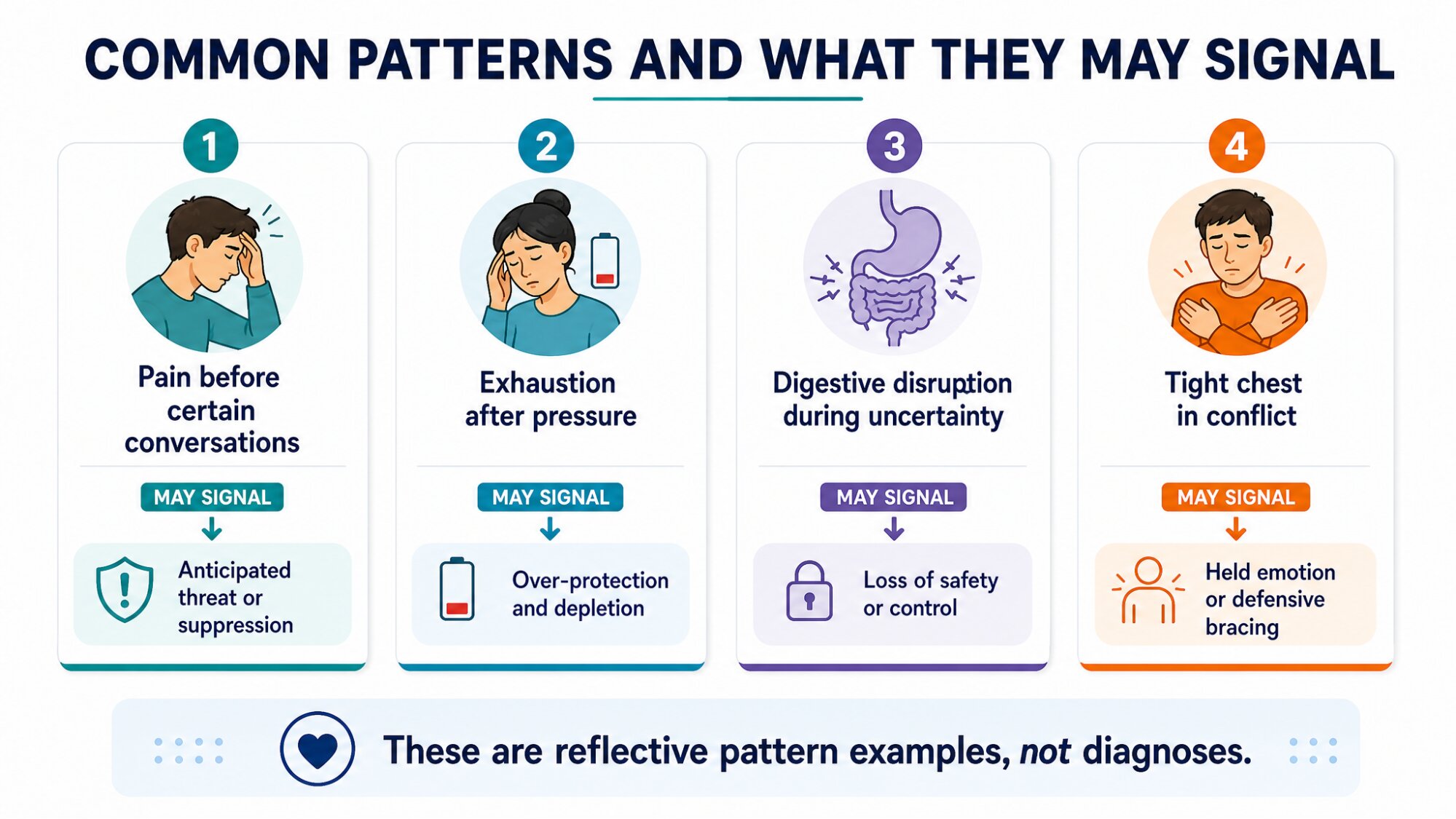
This is not a diagnostic framework. Every person's body has its own language, and the meanings are individual. But there are patterns that appear commonly enough to notice.
Chronic jaw tension and headaches often accompany sustained suppression of something that wants to be said. Tight shoulders and chest pressure often accompany the experience of carrying too much for too long without support. Lower back pain is sometimes connected to feeling unsupported or to unresolved fears about the future. Digestive disruption often maps closely to anxiety, conflict, or environments that feel unsafe.
Again, these are patterns, not diagnoses. And the pattern always points toward the deeper level, the emotional or psychological material that the body has been holding in the absence of another place to put it.
Listening to the Body as a Practice
Most of us have been trained to listen to the body only when it is loud enough to demand attention. When the pain is bad enough. When the tension is severe enough. When the symptom can no longer be ignored.
A different approach is to begin listening earlier, and with a different quality of attention.
Not: what do I need to do to make this stop? But: what is my body trying to communicate? What has been held here? What does this area of the body need that it has not been receiving?
This kind of listening requires slowing down enough to hear. It requires a willingness to sit with what the body is saying without immediately trying to fix it. And it requires the belief that the body is not malfunctioning. It is communicating.
When Patterns Change
When the deeper material is addressed, whether through subconscious work, emotional processing, identity-level change, or the kind of deep nervous system work described throughout this site, the patterns in the body often begin to change.
The tension that has been in the same place for years begins to release. The pain that has no clear structural cause begins to diminish. The recurring symptom that appeared at the same time every week begins to appear less frequently, with less intensity.
This is not because the symptom was imaginary. It is because the communication has been received. The body no longer needs to repeat it so loudly.
A Practice for Listening
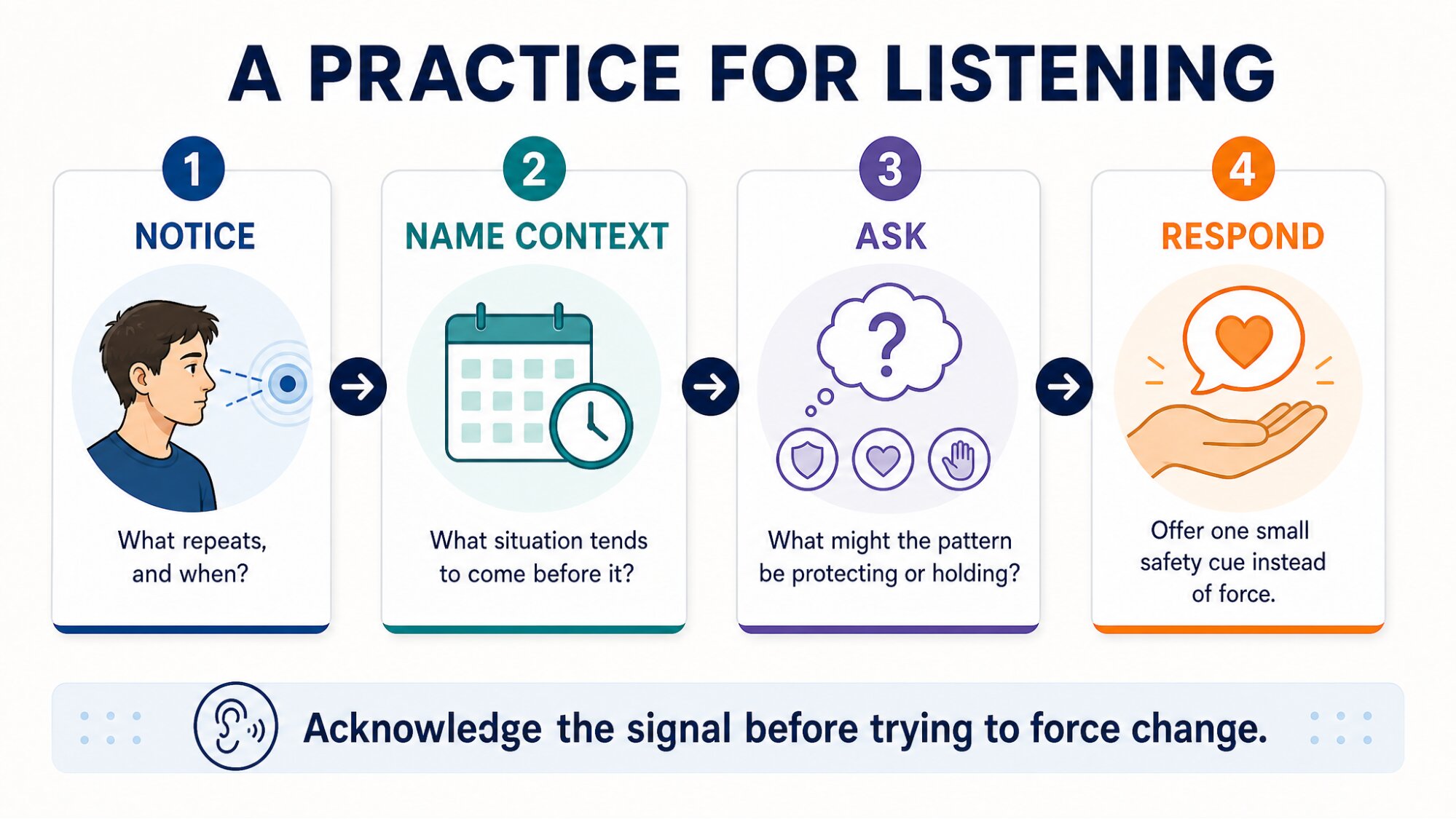
Take a quiet moment. Sit comfortably. Close your eyes if that feels safe.
Bring your attention to wherever you carry the most tension or discomfort in your body right now. Do not try to relax it immediately. Just be present with it.
Then ask, without needing a logical answer: if this part of my body could speak, what would it say? What does it want? What has it been holding that needs to be acknowledged?
Let what comes arrive without judgment. It may be an emotion. An image. A memory. A sentence. A feeling of something long unexpressed.
Acknowledge it. You do not need to solve it. Just acknowledge that you heard it. The body responds to being heard. Often, the tension begins to shift, not because you fixed anything, but because you stopped ignoring what it was saying.
The Deeper Message
Your body is not failing randomly. It is not generating symptoms out of nowhere. It is not simply malfunctioning.
It is communicating. In the only language available to it. And the patterns it uses are meaningful, if you learn to read them.
The deepest healing often begins not with a new treatment protocol, but with the willingness to listen to what the body has been trying to say for a long time.
Note: The ideas in this article are for educational purposes only. They are not a substitute for medical, psychological, or psychiatric care. Always consult a qualified healthcare professional for any health or mental health concerns.
If your body tends to repeat one signal under certain kinds of pressure, what might change if you approached it first as communication instead of interruption?

Rami Bareket
Rami Bareket is an NLP Master Trainer and hypnotherapist with over 30 years of entrepreneurial experience and 20 years as a combat medic. Through NLP, hypnosis, and integrative transformation work, he helps high performers create fast and lasting change from the inside out.
Read Full Bio