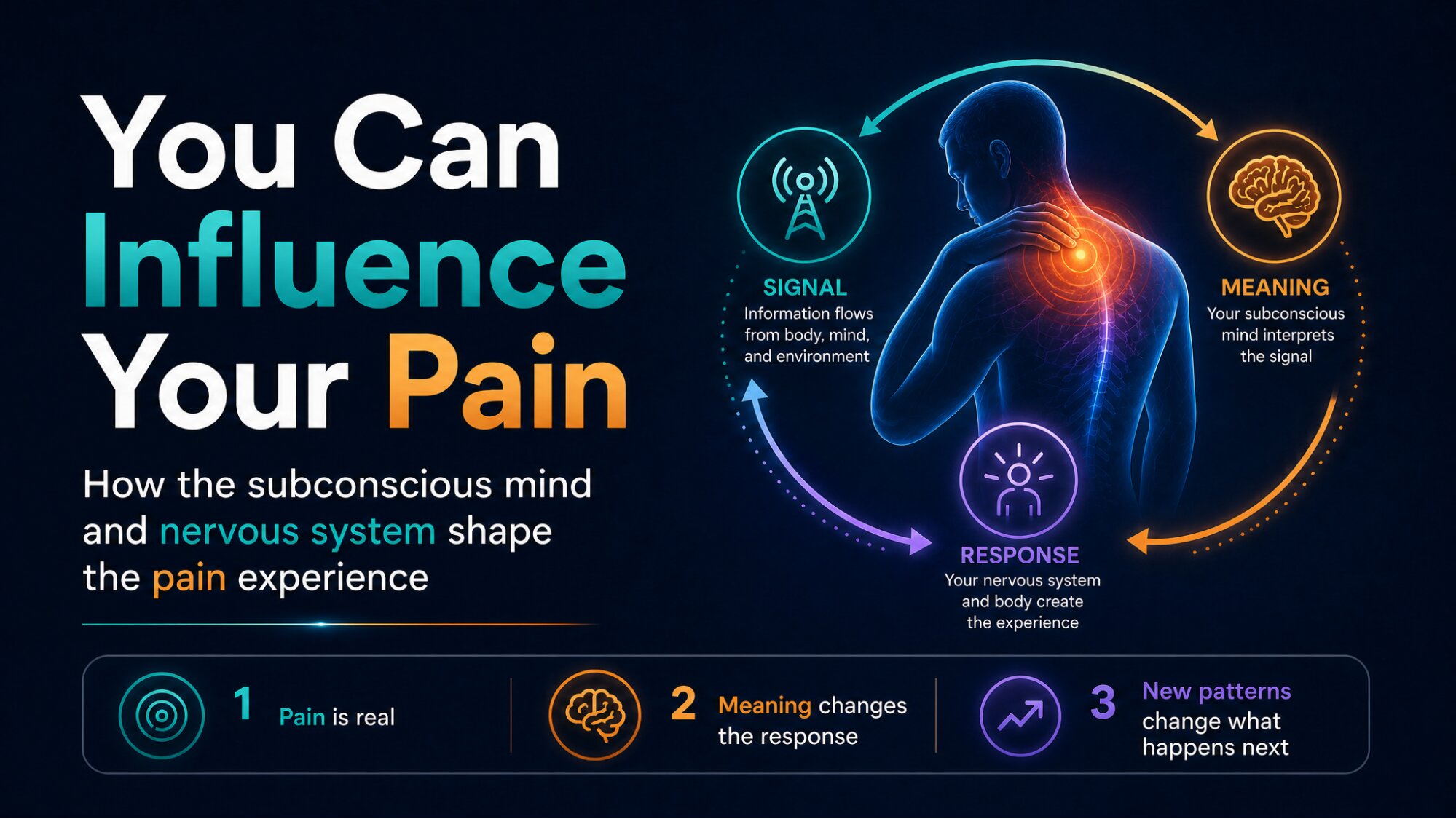
“I just need this to stop.”
That is often the first thought.
Not because you are weak.
Because pain can interrupt everything.
Your focus.
Your patience.
Your work.
Your sleep.
Your confidence.
Your sense of control.
Your trust in your own body.
For a high performer, pain is rarely just pain.
It does not only hurt.
It gets in the way of the meeting.
The decision.
The conversation.
The deadline.
The family responsibility.
The life you are trying to lead.
And when it keeps showing up, the question becomes deeper than:
“How do I get through today?”
It becomes:
“Why does my body keep doing this?”
That question matters.
Because pain is not only a body event.
Pain is also a brain event.
A nervous system event.
And often, a subconscious pattern.
Pain Is Real, But It Is Not Simple
The first thing to make clear is this:
But pain is not as simple as most people were taught.
Many people think pain works like this:
Something happens in the body.
The body sends pain.
The pain is felt exactly as it is.
That is the whole story.
But the nervous system is more complex.
The body sends signals.
The spinal cord and brain process those signals.
The brain interprets what those signals mean.
The nervous system decides how much protection is needed.
And then the pain experience is created.
That means pain is influenced by more than the original signal.
It is influenced by stress.
Emotion.
Memory.
Attention.
Fear.
Meaning.
Identity.
And subconscious patterns the body has learned over time.
The Body Sends the Signal. The Brain Creates the Experience.
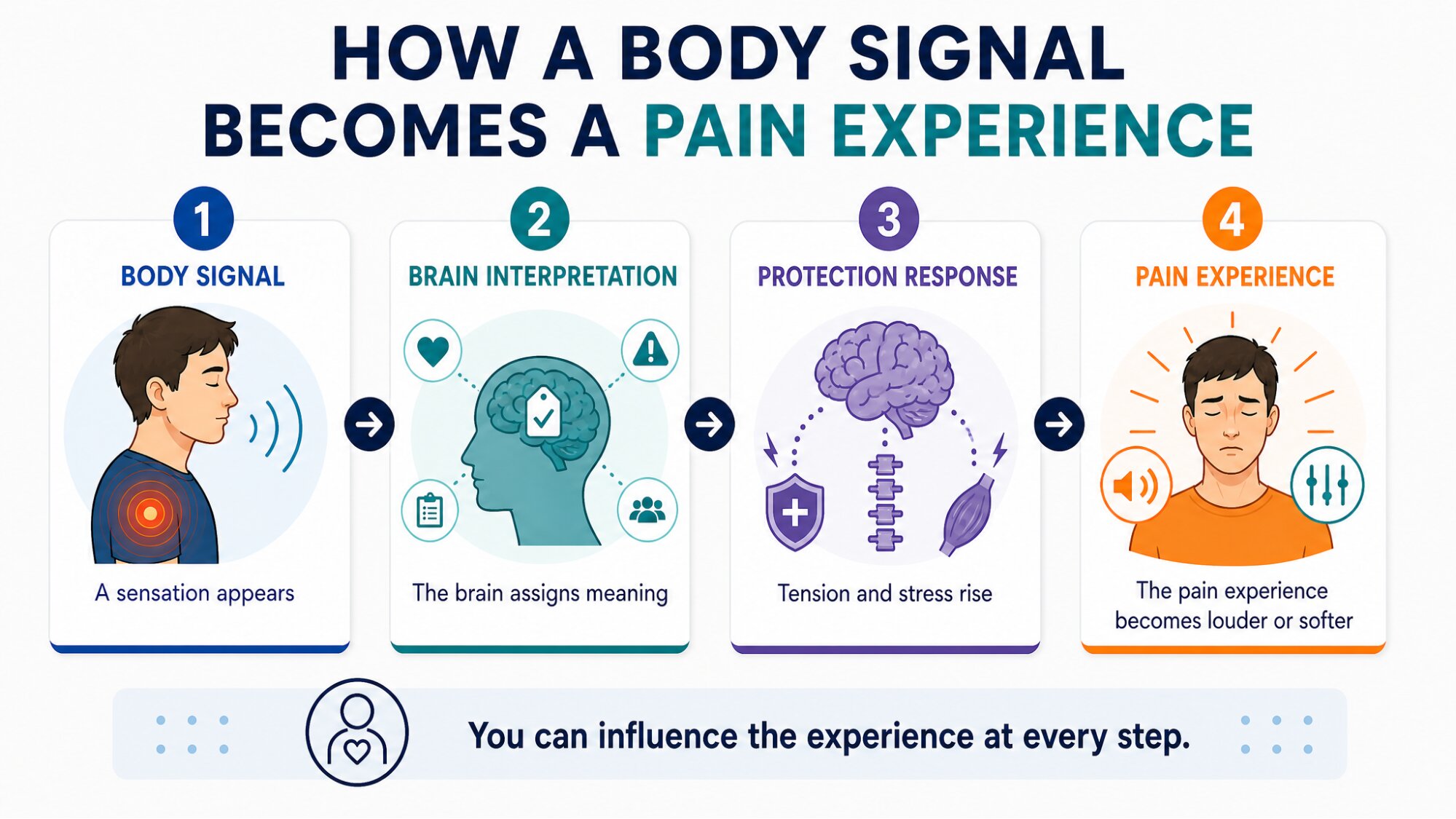
Figure: The experience of pain is shaped after the original signal appears, especially by interpretation and protection.
A signal may begin in the back.
Or the neck.
Or the shoulder.
Or the hip.
Or the stomach.
Or the head.
But the experience of pain is created through the brain and nervous system.
The brain is constantly asking:
"What is this?"
"Is this safe?"
"Is this dangerous?"
"Have I felt this before?"
"What happened last time?"
"How much protection do I need right now?"
If the brain interprets the signal as manageable, the body may soften.
If the brain interprets the signal as dangerous, the body may protect.
And protection often feels like more pain.
More tension.
More guarding.
More sensitivity.
More scanning.
More fear.
More emotional reaction.
This is why the same physical sensation can feel different in different situations.
A tight shoulder on a quiet weekend may feel annoying.
The same tight shoulder before a major presentation may feel threatening.
The signal may be similar.
But the nervous system state is different.
And the state changes the experience.
Why Stress Makes Pain Louder
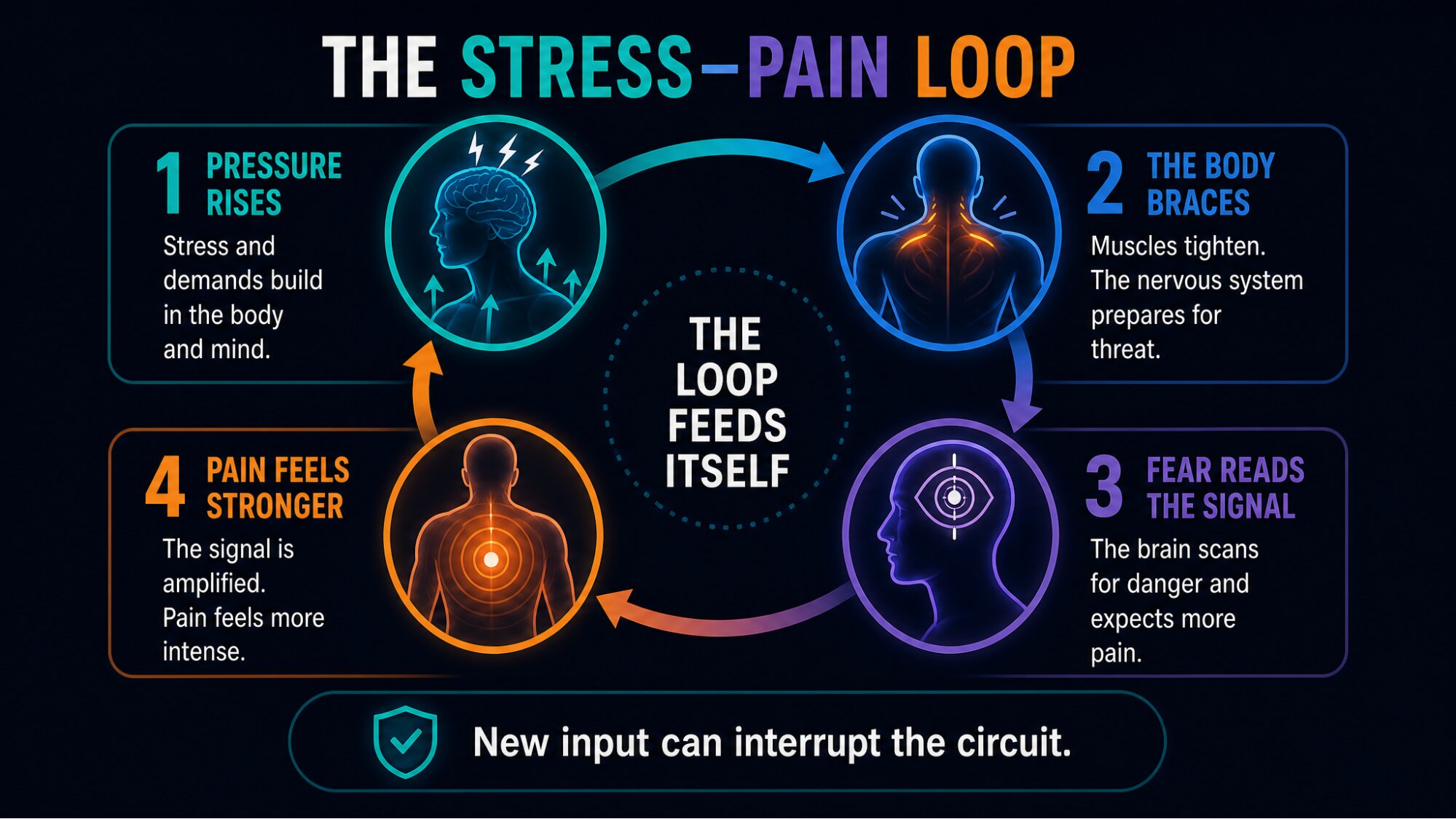
Figure: Stress and pain can reinforce one another until protection mode becomes the system's default.
Stress changes the way the nervous system listens to the body.
When pressure rises, the brain becomes more alert.
Attention narrows.
Muscles prepare.
Breathing changes.
The body scans for signs of danger.
This is useful if there is an immediate threat.
But when the stress is constant, the body may begin living in protection mode.
Then small signals can feel bigger.
A mild tension becomes urgent.
A familiar ache becomes alarming.
A normal sensation becomes something to monitor.
And once the mind begins reacting, the loop tightens.
Stress increases pain sensitivity.
Pain increases stress.
The body tightens more.
The signal feels louder.
The mind becomes more worried.
The nervous system stays activated.
This is the Stress-Pain Loop.
And for many high performers, it runs quietly in the background for years.
The Subconscious Mind Runs the Automatic Pattern
The image points to the subconscious mind because pain responses are often automatic.
You do not consciously decide to tighten your shoulders.
You do not consciously decide to hold your breath.
You do not consciously decide to scan your body every few minutes.
You do not consciously decide to fear a sensation before you even understand it.
The system reacts quickly.
That subconscious pattern may include:
bracing
guarding
fear of movement
body scanning
pain memories
old emotional associations
catastrophic predictions
protective tension
identity beliefs
stress responses
This is why conscious logic is not always enough.
You may tell yourself:
“I am probably okay.”
But the body may still react as if danger is present.
You may know intellectually that stress affects pain. But your nervous system may still amplify the signal during pressure.
You may understand that fear makes symptoms worse. But the fear still appears before you can stop it.
That is because the pattern is not only conscious.
It is learned at a deeper level.
What It Means to Work With the Subconscious Mind
Working with the subconscious mind does not mean doing something strange or mystical.
It means communicating with the part of the system that runs automatic responses.
The part that reacts before logic.
The part that protects before permission.
The part that remembers old pain.
The part that connects sensation with fear.
The part that learned:
"This signal means danger."
"This movement is risky."
"This pain ruins my day."
"My body cannot be trusted."
PainShift works by helping that deeper system learn something new.
Not only through information.
Through experience.
Through breath.
Through imagery.
Through somatic safety.
Through emotional release.
Through hypnosis.
Through identity rehearsal.
Through repeated nervous system regulation.
Because the subconscious does not change only because you understand. It changes when the body experiences a new pattern enough times.
Pain Control vs Pain Influence
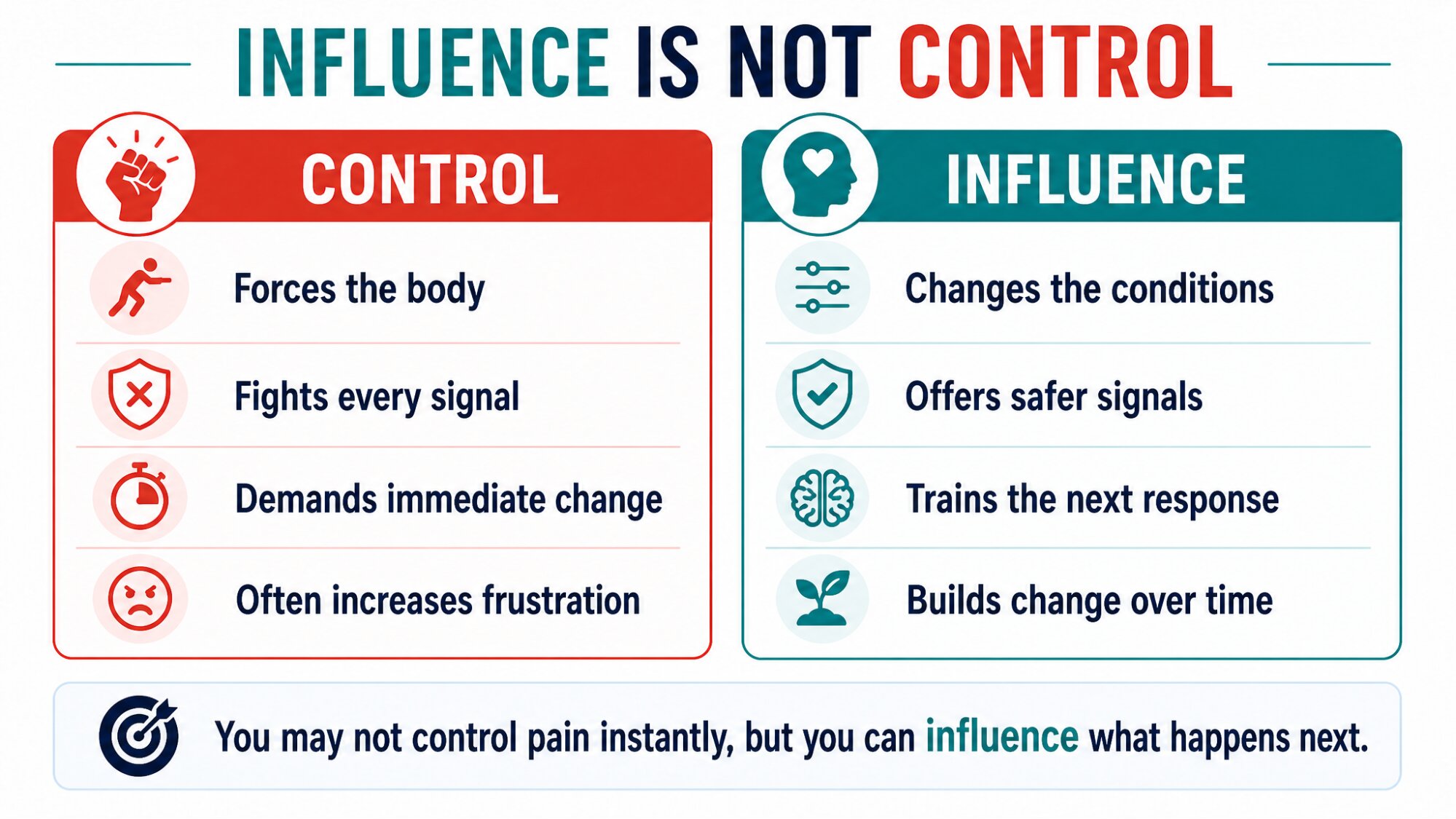
Figure: Influence is often the more workable target because it focuses on changing the response around the signal.
The image says:
“You can control your pain.”
That is a powerful message.
But in PainShift, I would say it more precisely:
You can influence your pain experience.
You may not always control the first signal.
You may not always decide when a sensation appears.
You may not always be able to force pain away immediately.
But you can often influence what happens next.
You can influence the story.
You can influence the state.
You can influence the breath.
You can influence the muscle response.
You can influence the emotional reaction.
You can influence the subconscious prediction.
You can influence the nervous system's sense of safety.
And when those layers change, the pain experience can change too.
The Brain Can Turn Pain Up or Down
The brain has the ability to amplify pain.
It also has the ability to reduce pain.
When the system detects danger, it may turn the signal up.
When the system detects safety, it may begin turning the signal down.
That is why the goal is not to attack the pain.
The goal is to teach the nervous system that the signal may be safer than it first believed.
That can happen through:
slower breathing
relaxed posture
somatic grounding
reframing the pain story
emotional processing
subconscious visualization
hypnotic rehearsal
movement confidence
identity change
supportive lifestyle rhythms
Each of these sends information to the nervous system.
The message is:
“We do not need to protect this hard right now.”
Over time, that message can become a new pattern.
A High Performer Example
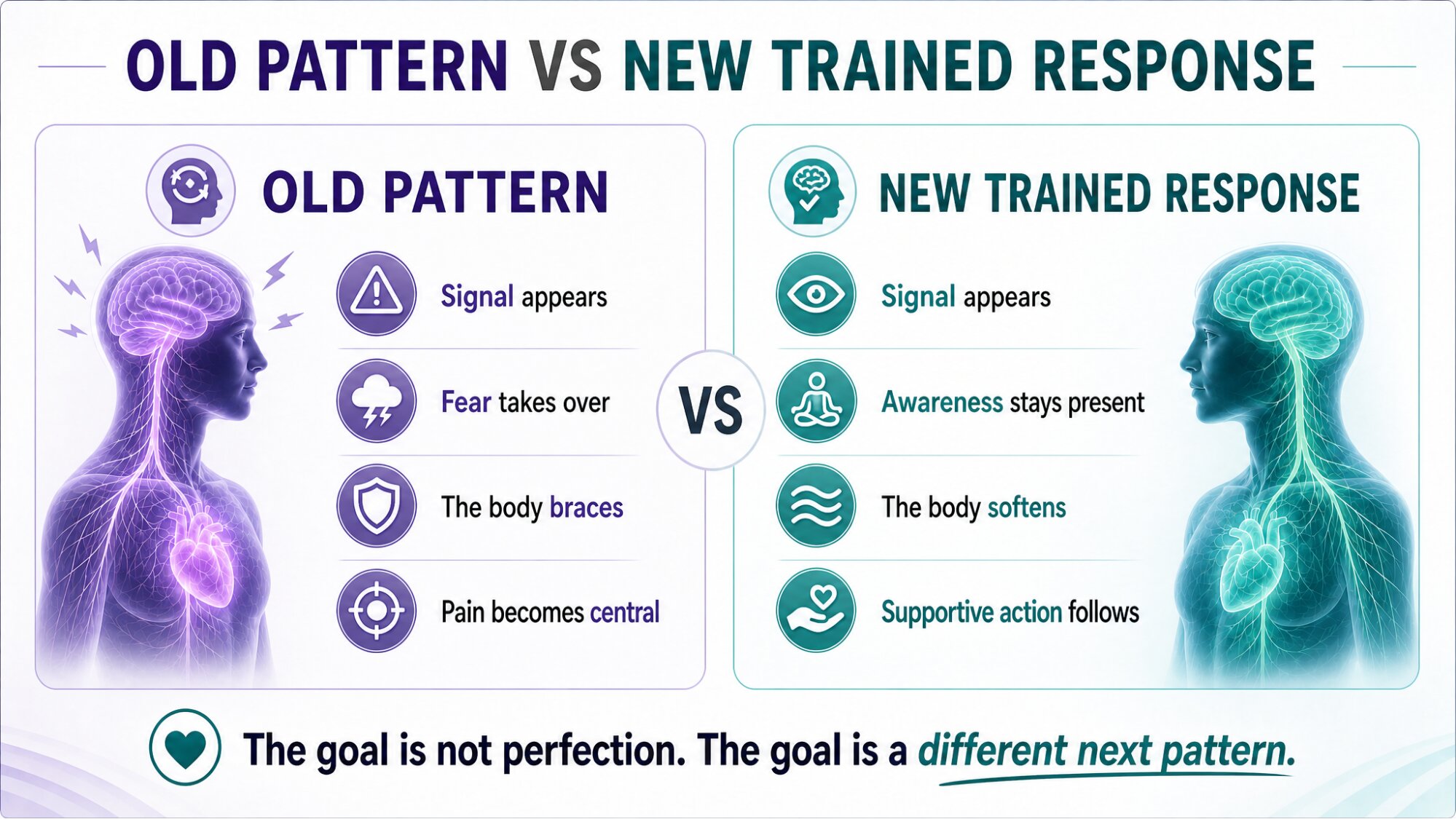
Figure: The shift is from automatic fear-based reaction to a trained regulating response.
Imagine a business owner preparing for an important client call.
A familiar pain appears in the lower back.
At first, it is just a signal.
Then the subconscious pattern activates.
The old story appears:
“This is happening again.”
The fear appears:
“What if I cannot sit through the call?”
The identity appears:
“My body lets me down when I need it most.”
The body responds:
breath shortens
jaw tightens
back muscles guard
attention locks onto the sensation
stress increases
Now the pain feels stronger.
The person may think the pain suddenly got worse. But what really happened is that the whole system amplified. The signal entered a network of fear, memory, meaning, and protection.
Now imagine a different response.
The signal appears.
The person pauses.
They lengthen the exhale.
They soften the jaw.
They say internally:
“This is a signal. My system is activated. I can help it regulate.”
They imagine the sensation softening, spreading, cooling, or moving farther away.
They remind the body:
“I am safe enough in this moment.”
They picture themselves completing the call calmly.
Now the nervous system receives different information.
The pain may not vanish instantly.
But the loop begins to loosen.
The person is no longer reacting from panic.
They are leading the system.
Why Hypnosis and Visualization Can Help
Hypnosis and visualization are useful because the subconscious mind responds strongly to imagery, emotion, repetition, and inner rehearsal.
If the nervous system has rehearsed pain fear for years, it may begin expecting pain.
It may expect flare-ups.
It may expect danger.
It may expect limitation.
Visualization can help rehearse a different prediction.
The person can mentally practice:
moving with more ease
responding calmly to signals
feeling safe in the body
performing with steadiness
releasing old emotional tension
trusting the body again
Hypnosis can help deepen that rehearsal by quieting the analytical mind and opening access to more automatic patterns.
The goal is not to trick the brain.
The goal is to teach the nervous system through repeated inner experience.
A new prediction.
A new response.
A new identity.
The Identity Layer
Pain often becomes more difficult when it becomes part of identity.
At first, someone says:
“I have pain.”
Over time, they may begin to feel:
“I am someone with pain.”
Then:
"I am fragile."
"I am limited."
"I cannot trust my body."
"I am always managing symptoms."
This matters because the nervous system protects based on identity.
If the system believes:
“I am fragile,”
it may guard more.
If it believes:
“My body is unsafe,”
it may scan more.
If it believes:
“Pain means danger,”
it may amplify more.
That is why PainShift does not only work with the signal. It works with the self-concept around the signal.
A new identity might sound like:
"I am someone learning to regulate."
"My body is communicating, not betraying."
"I can support my nervous system."
"I can respond instead of panic."
"I am rebuilding trust with my body."
This kind of identity gives the subconscious mind a new direction.
Manage, Reduce, and Even Resolve
The image says pain can be managed, reduced, and even eliminated.
That can be true for some people, depending on the cause, the pattern, and the system involved.
A responsible way to understand it is this:
Some people learn to manage pain better.
Some reduce pain intensity.
Some reduce flare frequency.
Some change the emotional reaction around symptoms.
Some experience major relief.
Some experience pain resolution.
The key is not to promise the same outcome for every person.
The key is to understand the mechanism:
When the nervous system stops amplifying the signal, the pain experience can change.
Sometimes slightly.
Sometimes significantly.
Sometimes dramatically.
A Simple PainShift Practice
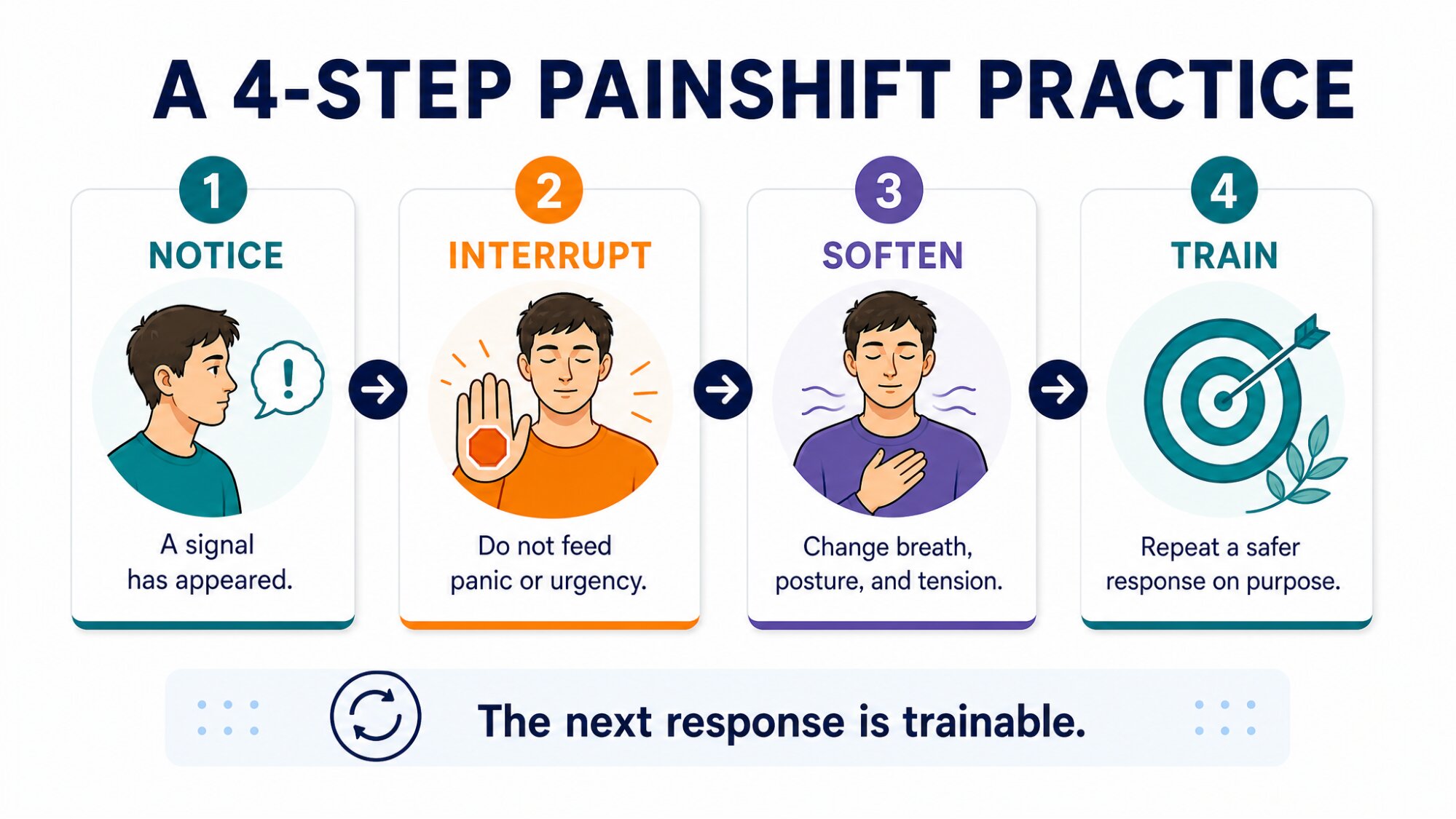
Figure: A simple sequence for naming the signal, spotting the pattern, reframing the message, and sending safety.
The next time a pain signal appears, pause before reacting.
Ask:
“What is the signal?”
Name it simply.
Tightness.
Pressure.
Heat.
Aching.
Heaviness.
Pulsing.
Then ask:
“What is my subconscious pattern doing?”
Am I bracing?
Am I scanning?
Am I fearing the future?
Am I remembering last time?
Am I judging my body?
Am I preparing for the worst?
Then ask:
“What message would help my system regulate?”
Try:
"This is a signal, not an emergency."
"My body is asking for support."
"I can slow down before I react."
"I can breathe into safety."
"I can work with my nervous system."
Then send one physical signal of safety.
Lengthen the exhale.
Drop the shoulders.
Relax the jaw.
Feel your feet.
Place a hand on the body.
Soften the area around the sensation.
Let the subconscious mind receive a different message through the body.
The Deeper Shift
The deeper shift is not only pain relief.
It is relationship repair.
Repairing the relationship with your body.
Repairing trust with your nervous system.
Repairing the belief that your body is against you.
Repairing the old pattern that says pain means danger, panic, or defeat.
Because when the body stops feeling like the enemy, the nervous system can begin to soften.
When the nervous system softens, the signal may become less threatening.
When the signal becomes less threatening, the body may stop protecting so intensely.
And when protection decreases, the pain experience can begin to change.
Pain-Free Performance Begins Here
Pain-Free Performance does not begin with controlling every signal.
It begins with learning how to influence the system behind the signal.
A signal appears.
The old pattern reacts:
fear
bracing
scanning
pushing
judgment
amplification
The new pattern responds:
pause
breath
safety
reframe
softening
regulation
Your Practice Invitation
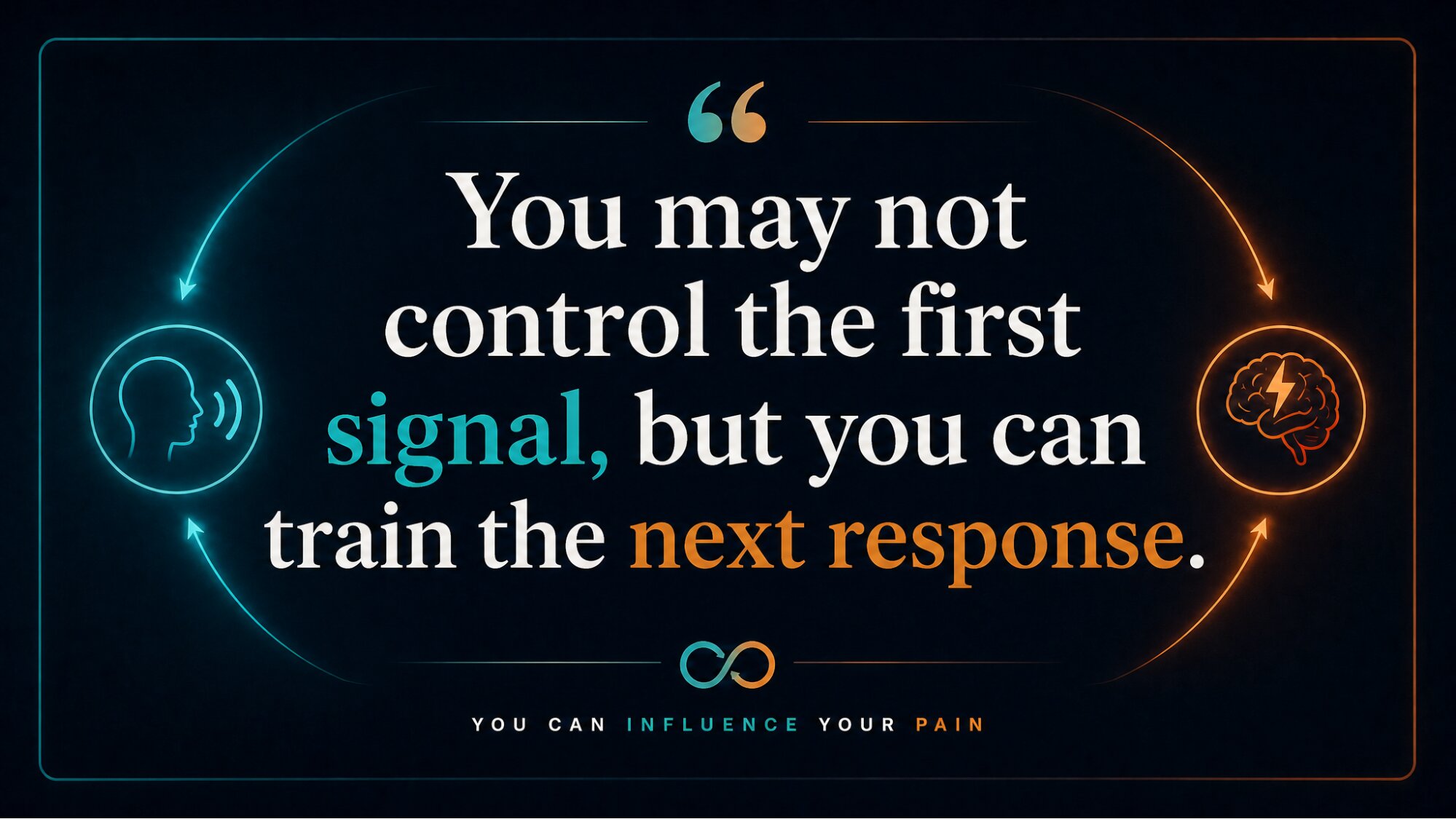
The next time pain appears, do not only ask:
“How do I stop this?”
Ask:
“What is my nervous system doing with this signal?”
Then ask:
“What can I teach my system right now?”
Because you may not choose the first signal. But you can train the next response.
You can train the breath.
You can train the story.
You can train the state.
You can train the subconscious pattern.
You can train the identity.
And when the system learns a new response, pain no longer has to run the show.
But the pattern around pain can change.
And when the pattern changes, the body may finally begin to experience something new:
less fear
less bracing
less amplification
more safety
more regulation
more trust
That is where true influence begins.
The next time pain appears, what part of the experience seems most influenceable for you first: the breath, the story, the body's bracing, or the sense of safety in the moment?

Rami Bareket
Rami Bareket is an NLP Master Trainer and hypnotherapist with over 30 years of entrepreneurial experience and 20 years as a combat medic. Through NLP, hypnosis, and integrative transformation work, he helps high performers create fast and lasting change from the inside out.
Read Full Bio