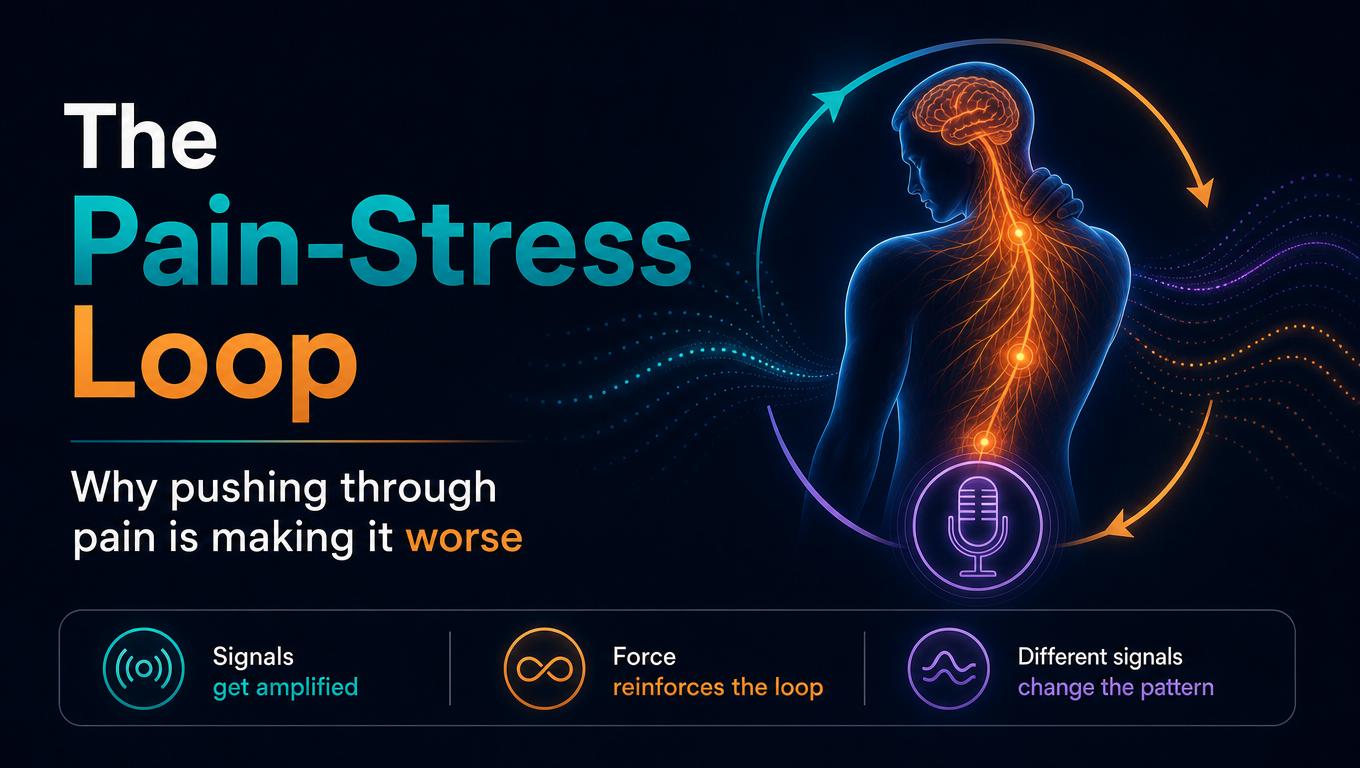
Why Pushing Through Pain Is Making It Worse
Quick read.
- Pushing through is understandable, but it can reinforce threat when the system is already overprotective.
- Pain and stress often intensify through feedback loops involving meaning, attention, and body-level protection.
- Pacing is not avoidance. It is a steadier alternative to boom-and-bust effort.
- The goal is not to become passive. It is to interrupt the loop sooner.
- A more useful promise than force is influence.
Clinical note. This document is an educational editorial resource. It does not replace diagnosis, emergency assessment, or individualized medical care.
For many high performers, pushing through is a proven strategy. It gets the meeting done, the deadline met, and the visible result delivered.
The problem is that pain and stress do not behave like deadlines. A deadline ends. A sensitized loop often does not end simply because the task was completed.
That is why the same discipline that helps people succeed can accidentally train the body to keep bracing, keep scanning, and keep amplifying the signal.
Why the Push-Through Strategy Backfires
Pushing through is not a moral flaw. It is a strategy built from competence, discipline, and necessity. But if the system already interprets the moment as threat, using more force can read like confirmation that the threat was real.
The sensation becomes linked not only with discomfort, but with urgency, effort, and internal override. Over time, that can make the next flare easier to trigger and harder to settle.
The Push-Through Loop
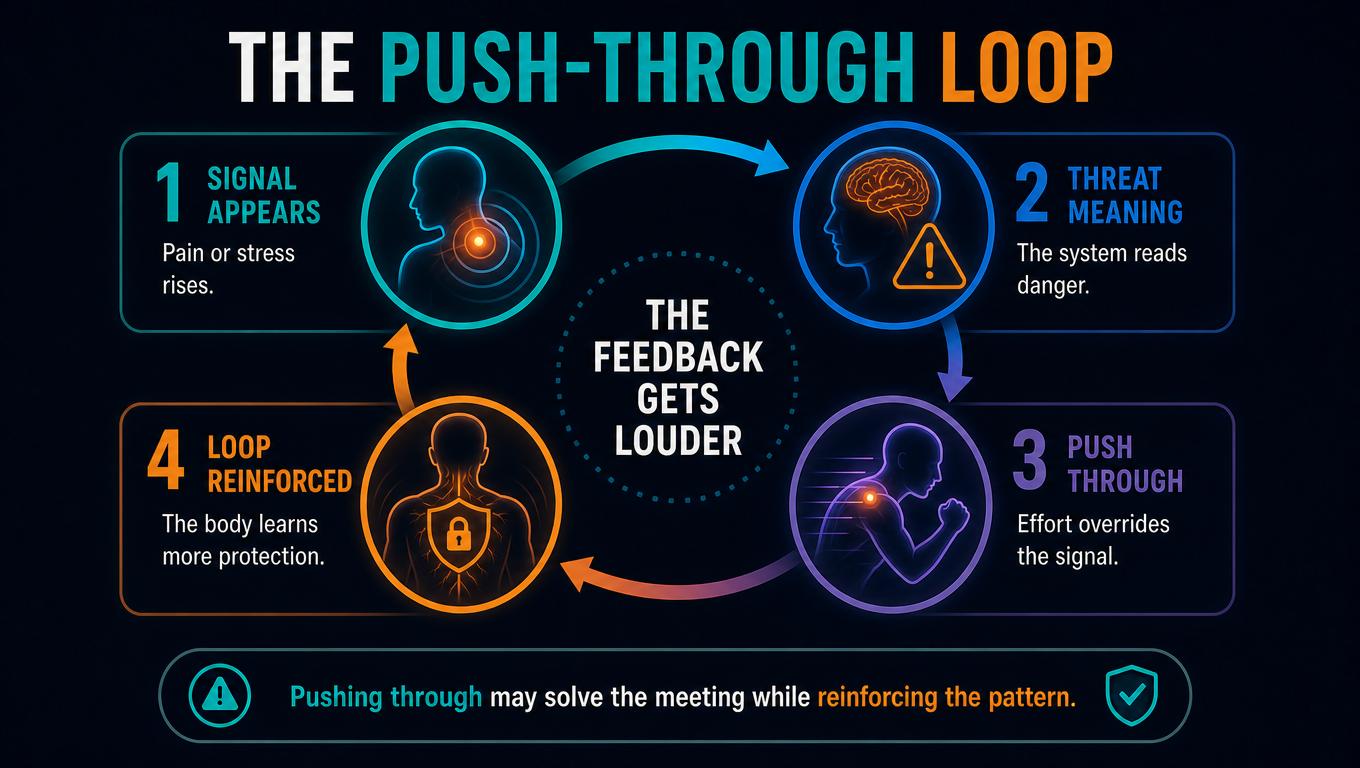
Figure: A feedback loop showing signal, threat meaning, push-through behavior, and reinforcement.
A signal appears. The system gives it threat meaning. Effort overrides the signal. The loop gets reinforced. This is why people often say, “I got through it, but I paid for it later.”
The visible success can hide the invisible cost. On the surface, the meeting went well. Underneath, the body learned that pain is something to fight, fear, and outwork.
Why Pacing Is a Smarter Middle Ground
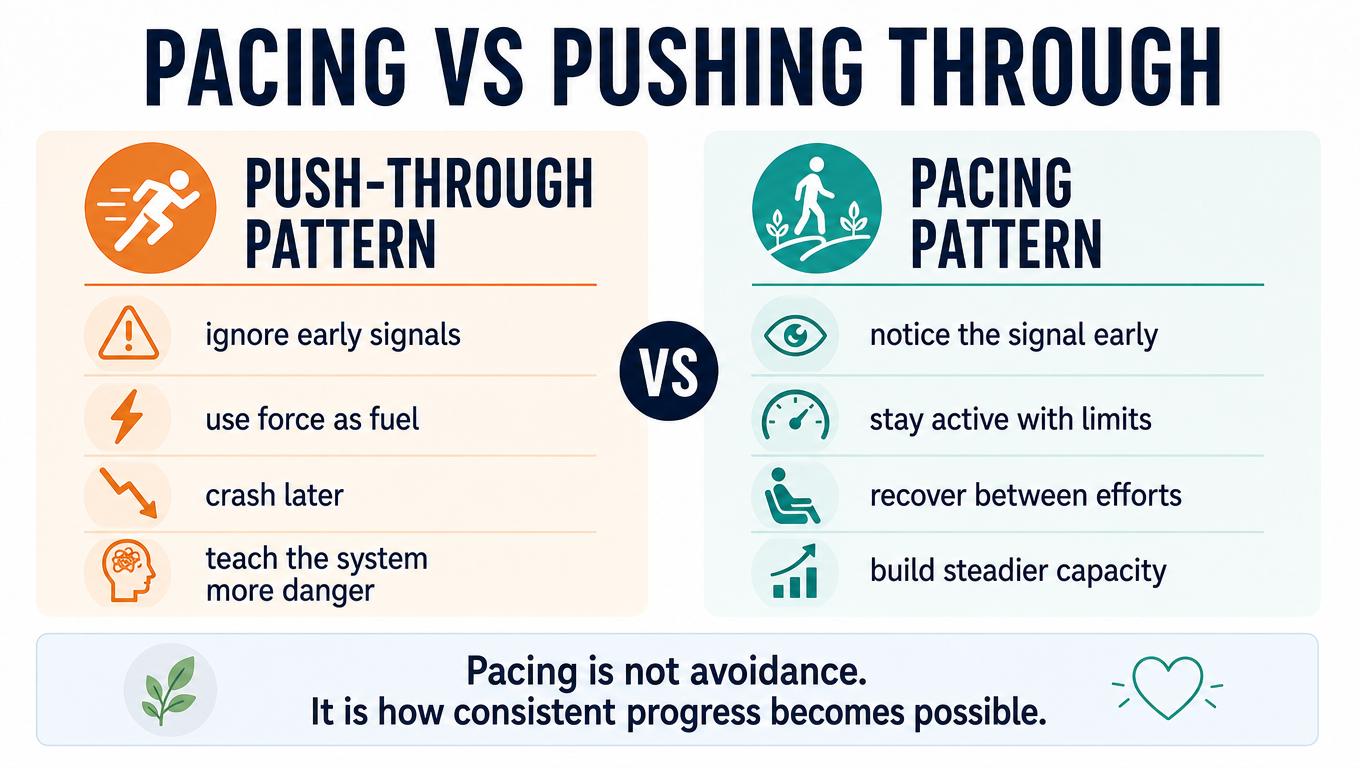
Figure: A side-by-side comparison of the push-through pattern versus pacing.
Pacing is often misunderstood as backing off too early. In reality, it is a skillful way to stay active without swinging from overexertion to collapse.
It replaces the boom-bust pattern with steadier progress. That matters because the nervous system learns more from consistent experiences of safety and control than from repeated cycles of overload and recovery debt.
A Better Goal Than Willpower
The goal is not to do nothing. It is also not to white-knuckle every symptom spike. A better goal is to interrupt the loop earlier, when attention is narrowing and bracing is just beginning.
That may look like pausing, widening focus, changing the internal language, reducing muscle guarding, or breaking a task into tolerable intervals. Small interruptions matter because they teach the system that another response is possible.
Replace This Pattern
| Less helpful pattern | More helpful pattern |
|---|---|
| Ignore the early signal | Notice the early signal and respond sooner. |
| Use force as the primary tool | Use pacing, regulation, and steadier exposure. |
| Crash after productive days | Recover between efforts and reduce boom-bust swings. |
| Treat pain as a test of worth | Treat pain as a system condition that can be influenced. |
Final Thought
Pain is not always asking for more strength. Sometimes it is asking for a different signal.
The moment that idea lands, many people stop treating relief as a fight and start treating it as a pattern change.

Rami Bareket
Rami Bareket is an NLP Master Trainer and hypnotherapist with over 30 years of entrepreneurial experience and 20 years as a combat medic. Through NLP, hypnosis, and integrative transformation work, he helps high performers create fast and lasting change from the inside out.
Read Full Bio